Strategies for Balancing ACoS and TACoS Without Killing Growth
November 16, 2025
Strategies for Balancing ACoS and TACoS Without Killing Growth
In the world of Amazon advertising, two key metrics — Advertising Cost of Sales (ACoS) and Total Advertising Cost of Sales (TACoS) — are often misunderstood. Sellers frequently focus on one while neglecting the other, leading to missed growth opportunities or reduced profitability. The real success lies in balancing both metrics — maintaining efficient ad spend while fueling long-term organic growth.
Understanding ACoS vs. TACoS: Why Both Matter
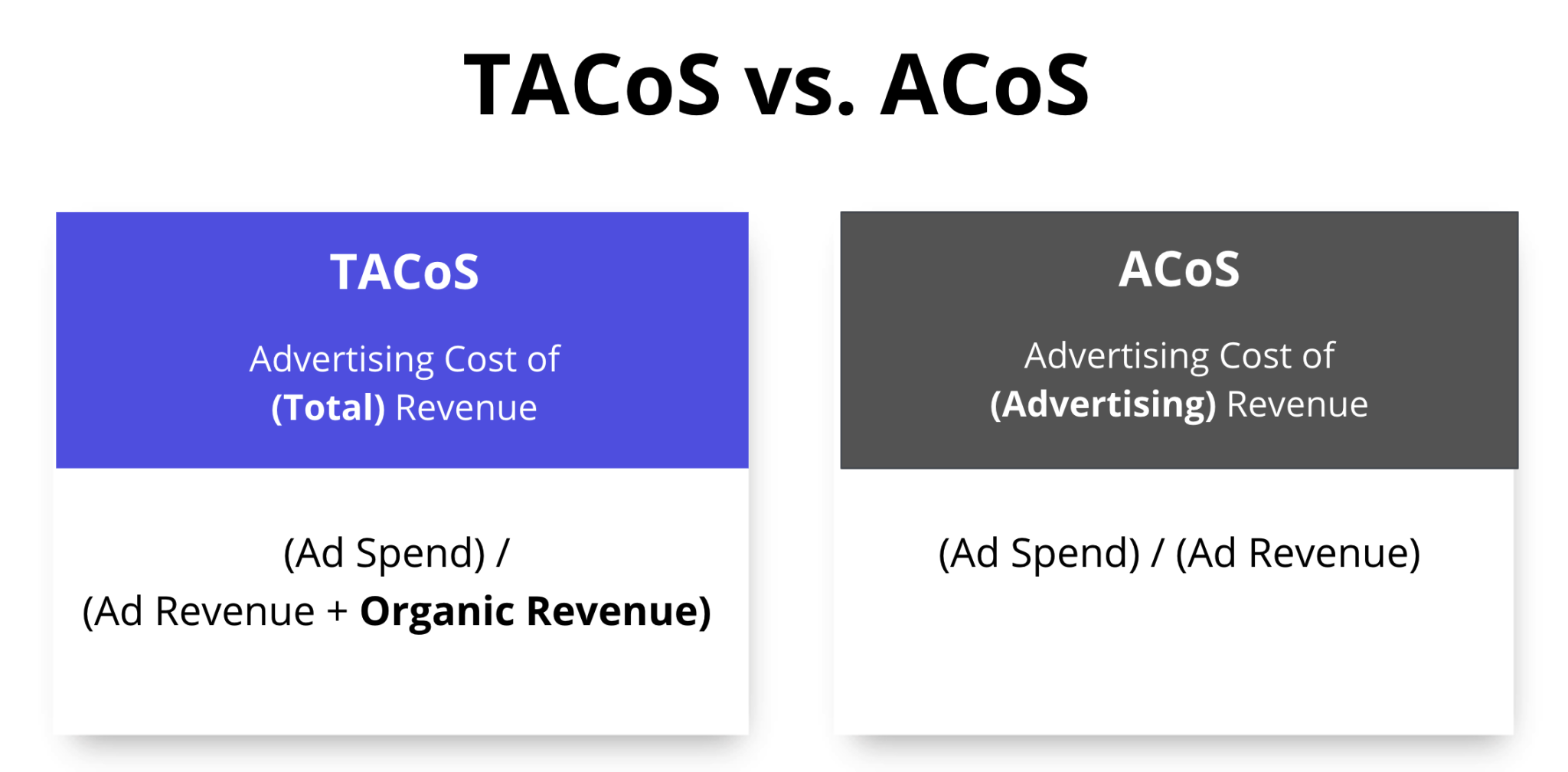
ACoS measures how much you spend on ads relative to the revenue they generate. TACoS goes a step further — it measures ad spend relative to total sales, including organic ones.
When ACoS drops but TACoS remains high, it often signals that your sales rely too heavily on paid traffic. Conversely, when TACoS decreases over time, it indicates that your advertising efforts are successfully building organic momentum.
The key takeaway:
Focusing only on ACoS might make campaigns look efficient but doesn’t guarantee brand growth.
Prioritizing TACoS without watching ACoS could mean you’re too conservative, limiting reach.
The goal is harmony — efficient ad campaigns that also strengthen your organic sales base.
Strategy 1: Set Smart Targets Based on Business Stage
Different stages of a product’s lifecycle require different ad strategies. Here’s how to tailor your goals.
New Product Launch
Expect higher ACoS as visibility and ranking are the priorities.
TACoS will naturally be higher until organic sales begin to grow. Tip: Allocate budget for broader keyword exposure and measure how quickly organic rank improves.
Growth and Scaling Phase
Focus on lowering ACoS while ensuring TACoS steadily declines.
Track how much your total sales increase compared to ad spend.
Set both ACoS and TACoS benchmarks to monitor performance holistically.
Mature Product Phase
Prioritize profitability by maintaining low TACoS.
Optimize listings, pause underperforming ads, and consolidate spend on proven keywords.
For best results, build a dual KPI dashboard: campaign-level ACoS for tactical optimization and product-level TACoS for strategic growth tracking.
Strategy 2: Drive Organic Sales to Reduce TACoS
Since TACoS is influenced by total sales, increasing organic sales will naturally lower this metric without cutting your ad budget.
Proven Tactics:
Optimize listings: Refine titles, bullet points, and images to increase conversion rates.
Generate reviews: More positive reviews boost visibility and trust, which strengthens organic ranking.
Use external traffic: Drive qualified buyers from social media, email lists, or your own website.
Bundle and cross-sell: Encourage multi-product purchases to increase total sales and spread advertising cost across SKUs.
Example Framework:
Weeks 1–4: Focus on visibility; tolerate higher ACoS.
Weeks 5–12: Shift to efficiency by refining targeting and tracking organic rank improvements.
Week 13 onward: Stabilize TACoS through listing improvements and cross-channel marketing.
Strategy 3: Optimize Campaigns Without Sacrificing Growth
Balancing efficiency and growth means knowing where to adjust bids, budgets, and keyword targeting.
Focus on High-Converting Keywords
Identify and invest in search terms with strong conversion rates.
Use negative keywords to filter out poor-performing traffic.
Adjust Bids with Intent
Increase bids for keywords showing steady ACoS and improving TACoS.
Lower bids where ACoS is fine but TACoS is rising — it’s a sign your ads aren’t building lasting traction.
Invest in Awareness Campaigns
Sponsored Brand or Display ads may show higher ACoS but build recognition that supports organic growth.
Use these strategically to strengthen brand presence and long-term TACoS improvement.
Scale Smartly
Before scaling ad budgets, evaluate if your current spend is translating into proportional total sales growth. If TACoS climbs as spend increases, refine your strategy before expanding.
Strategy 4: Monitor Trends and Interpret Signals
Numbers alone don’t tell the full story. How they move together determines your next steps.
Key Patterns to Watch
Falling ACoS + Falling TACoS: Strong growth; ad efficiency and organic performance both improving.
Falling ACoS + Rising TACoS: Risky; you’re relying too much on paid sales.
Rising ACoS + Falling TACoS: Healthy during growth or launch; ads are fueling long-term traction.
Rising ACoS + Rising TACoS: Red flag; campaigns are inefficient and stalling organic sales.
Reporting Cadence
Weekly: Review ACoS, keyword data, and bidding adjustments.
Monthly: Track TACoS, total sales mix, and organic growth trends.
Quarterly: Reassess your business goals and adjust KPIs.
Strategy 5: Align Budget and Profit Margins
Even the most optimized campaigns can hurt profitability if margins aren’t aligned with ad budgets.
Margin Considerations
Understand your break-even ACoS and set realistic ad targets based on true profit margins.
A product with a 30% margin can sustain around 20% ACoS — anything higher may require careful monitoring.
Budget Allocation
Divide your ad budget between “growth” (exploratory) campaigns and “efficiency” (proven) campaigns.
Review TACoS monthly to determine which area needs more or less investment.
Remember: consistent TACoS improvement is a sign of sustainable advertising success.
Conclusion
Balancing ACoS and TACoS isn’t about cutting costs — it’s about spending strategically to build momentum that lasts. By setting realistic stage-based targets, growing organic sales, optimizing campaigns, and aligning budgets with profitability, sellers can achieve a balance that supports both short-term performance and long-term growth.
Smart advertising isn’t just about efficiency; it’s about building a system where every dollar spent today reduces your dependency on ads tomorrow.