How to Leverage Amazon Warehousing & Distribution (AWD) to Scale Profitably
February 10, 2026
How to Leverage Amazon Warehousing & Distribution (AWD) to Scale Profitably
As Amazon continues to evolve its logistics ecosystem, sellers who understand and adopt Amazon Warehousing & Distribution (AWD) early gain a meaningful operational advantage. AWD is not just another storage option — it’s a strategic upstream logistics solution designed to help brands reduce costs, smooth inventory flow, and prepare for peak demand without the traditional constraints of FBA limits.
In this guide, we’ll break down what AWD is, how it differs from FBA, and — most importantly — how to leverage it profitably and strategically as part of a modern Amazon growth plan.
What Is Amazon Warehousing & Distribution (AWD)?
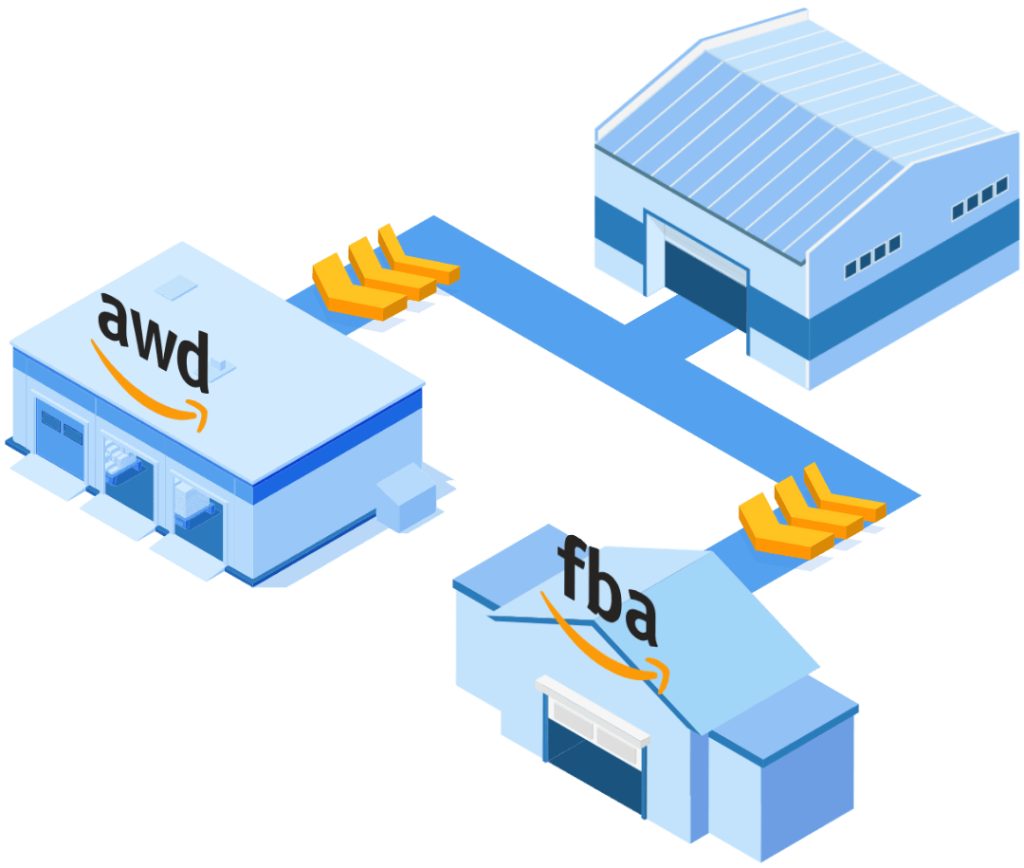
Amazon Warehousing & Distribution is a bulk storage and replenishment service that allows sellers to send inventory to Amazon before it’s needed in fulfillment centers. Instead of shipping directly into FBA, products are first stored in Amazon’s AWD facilities and then automatically replenished into FBA or other Amazon distribution channels as demand requires.
Think of AWD as Amazon’s version of a forward-deployed 3PL, but fully integrated into Seller Central.
Key characteristics:
Bulk pallet-level storage
Automatic downstream replenishment
Integration with FBA and multi-channel distribution
Lower long-term storage risk compared to FBA
This model mirrors supply-chain strategies used by enterprise retailers and platforms like Shopify and Walmart, where upstream inventory buffering reduces downstream fulfillment friction.
AWD vs. FBA: Understanding the Strategic Difference
Many sellers mistakenly evaluate AWD as a replacement for FBA. It’s not. AWD is designed to support FBA, not compete with it.
FBA is for selling. AWD is for staging.
Feature
FBA
AWD
Primary purpose
Order fulfillment
Bulk inventory storage & replenishment
Storage limits
Capacity-restricted
More flexible
Long-term storage fees
High risk
Lower risk
Ideal use
Ready-to-sell units
Future demand planning
Used together, AWD and FBA create a two-tier inventory system that protects margins and improves in-stock performance.
Why Amazon Is Pushing AWD (And Why Sellers Should Pay Attention)
Amazon’s logistics strategy increasingly mirrors large omnichannel retailers. By encouraging sellers to store inventory upstream, Amazon:
Reduces congestion at fulfillment centers
Improves inbound predictability
Stabilizes last-mile delivery performance
For sellers, this creates an opportunity to align with Amazon’s preferred supply chain behavior, which historically results in:
Better restock velocity
Fewer inbound disruptions
Improved operational trust signals
This is similar to how Walmart prioritizes sellers who adopt its preferred fulfillment workflows and how Shopify rewards brands that optimize inventory forecasting across channels.
The Business Case: When AWD Makes Sense
AWD is not for every seller — but for the right businesses, it can unlock serious operational leverage.
AWD is ideal if you:
Sell high-volume or replenishable products
Manufacture overseas with long lead times
Frequently hit FBA storage or restock limits
Experience Q4 congestion or inbound delays
Want to reduce reliance on external 3PLs
AWD may not be ideal if you:
Sell slow-moving or highly seasonal SKUs
Have minimal inventory depth
Rely on frequent SKU-level customization
The most successful AWD users treat it as a supply-chain layer, not a storage dump.
How AWD Reduces Total Landed Cost (Beyond Storage Fees)
Many sellers fixate on AWD storage rates — but the real savings are indirect.
Cost advantages include:
Fewer split shipments into multiple FCs
Reduced last-minute expedited shipping
Lower risk of FBA long-term storage penalties
Smoother container-level inbound planning
By staging inventory centrally, brands can plan production and shipping more like enterprise retailers — a model long advocated by logistics leaders in the Amazon and Shopify ecosystems.
Inventory Planning: The Right Way to Use AWD
The biggest AWD mistake is sending everything.
Instead, AWD should hold:
Core SKUs with predictable velocity
Long-lead-time inventory buffers
Peak-season safety stock
Best practice:
Forecast 90–180 days of demand
Send 60–70% of that volume to AWD
Allow Amazon to replenish FBA gradually
This keeps FBA lean while protecting against stockouts — a balance that improves sell-through and inventory performance metrics.
AWD and Peak Season: A Quiet Competitive Advantage
Q4 is where AWD shines.
Sellers who rely solely on FBA often face:
Inbound appointment delays
Storage capacity freezes
Emergency air freight costs
AWD users enter peak season with inventory already inside Amazon’s network, giving them priority replenishment when it matters most.
This approach mirrors how large brands prepare inventory buffers ahead of major sales events — a strategy commonly discussed in Walmart and enterprise retail logistics playbooks.
AWD as a Replacement for External 3PLs (Sometimes)
For some brands, AWD can partially replace traditional 3PL storage.
Potential benefits:
Fewer handoffs and data mismatches
Native Seller Central reporting
Reduced coordination overhead
Predictable replenishment logic
However, AWD should not fully replace:
Kitting or light assembly
Custom packaging
Non-Amazon fulfillment needs
The strongest setups use AWD alongside a flexible 3PL, not instead of one.
Common AWD Mistakes to Avoid
Even experienced sellers can misuse AWD. Watch out for:
Treating AWD as unlimited storage
Sending untested or slow SKUs
Ignoring cash-flow implications
Failing to align AWD quantities with demand forecasts
Assuming AWD automatically improves profitability
AWD amplifies good planning — and exposes bad planning.
How to Position AWD for Clients or Stakeholders
If you manage brands or advise sellers, AWD should be framed as:
A risk management tool, not a cost play
A way to stabilize inventory performance
A scalable alternative to reactive logistics
Clients respond best when AWD is positioned as part of a long-term supply chain strategy, not a short-term fix.
Final Thoughts: AWD Is a Strategic Lever, Not a Tactic
Amazon Warehousing & Distribution represents a shift toward enterprise-style logistics for third-party sellers. Brands that adopt it thoughtfully gain resilience, flexibility, and operational control — especially as Amazon tightens capacity and performance standards.
Like fulfillment models promoted across Amazon, Shopify, and Walmart, AWD rewards sellers who plan ahead, forecast accurately, and think beyond individual SKUs.
Used correctly, AWD doesn’t just store inventory — it protects margins, improves in-stock rates, and enables sustainable growth.